50th Anniversary of Authentic Chinese Food In The San Gabriel Valley—And How I Managed To Eat At Nearly Every Chinese Restaurant There Over The Past 50 Years
2026 is a milestone year for Chinese food in the United States, as it marks the 50th anniversary of the appearance of authentic Chinese food in the San Gabriel Valley. In 1976, the Hong Kong style Kin Kwok Restaurant opened up in Monterey Park. A lot of Chinese restaurants have since operated in the San Gabriel Valley in the past half century, and I’m proud to say that I’ve eaten at most of them. While that may sound a bit far fetched, I will explain to you that this has in fact been a manageable task.
Now the fact that real Chinese food has only been available in Monterey Park for 50 years may come as a shock to some people who assume that Monterey Park and the San Gabriel Valley has always been an area of Chinese concentration and full of Chinese food. So a little bit of background history is necessary before getting into my adventures in eating at thousands of Chinese restaurants in the San Gabriel Valley. The fact is that Monterey Park had virtually no Chinese residents until the 1960s, and put bluntly the reason was that Chinese were not allowed to live there. A hundred years ago, the San Gabriel Valley was a bastion of Ku Klux Klan sentiment, particularly centered in Monterey Park and El Monte. In that atmosphere, no Chinese would even think about living there, nor would anyone sell or rent to them anyway. And while Ku Klux Klan activity later subsided, other factors served to keep Chinese and other minority residents out. One major barrier was that most houses built in the Los Angeles area between about 1915 and 1948 included deed restrictions which forbade occupancy of the residence by any minorities on the premises, including Chinese, under pain of forfeiture of the property. These deed restrictions were eventually made ineffective by the United States Supreme Court in 1948. However, suspending these racial restrictive covenants did not mean that home sellers were required to sell to minority buyers, and nothing stopped neighbors from banding together and agreeing not to sell to minorities, which essentially is what happened in Monterey Park.
It wasn’t until the 1960s when real estate developers built new housing tracts in the hills of Monterey Park that Chinese and Japanese buyers were able to move into Monterey Park, as the developers were happy to sell their homes to buyers of all colors and there were no existing neighbors to object. By the time of the 1970 census, there were 2,000 Chinese living in Monterey Park, mostly American born professionals, as the 1960s changes to American immigration laws opening the doors to new Chinese immigrants had yet to have a significant impact on the local Chinese community. 2,000 Chinese wasn’t enough of a critical mass for Chinese restaurants and stores to open up locally, so Chinese dining continued to be centered in Los Angeles Chinatown, which was only fifteen minutes away from Monterey Park in 1970s Los Angeles traffic.
Even though I have never lived in Monterey Park or the San Gabriel Valley, a fortuitous set of circumstances led me to witness and participate in the arrival and then growth of Chinese food in the San Gabriel Valley. First of all, family friends were among the first wave of Chinese who moved into the Monterey Highlands development. Back in 1972 when visiting Monterey Park, I remember we wanted to go out for a Chinese meal and the only choice was something called Lum’s Cantonese, an Americanized Chinese restaurant (and now home to a sushi restaurant) on Atlantic Blvd., giving me a point of reference that Hong Kong style food had yet to arrive in Monterey Park.
The other event was graduating from law school and getting a job in 1973 with Kenneth Leventhal & Company in Century City, a non-Big 8 CPA firm that staffed their tax department with both lawyers and accountants. Two important points of context. This was after the Civil Rights movement of the 1960s had broken down many barriers of racial discrimination and segregation, and right after the first wave of college students from Hong Kong and Taiwan had migrated to the United States to attend college under the new immigration laws. By the time I started working, these pioneering students had graduated from US schools and began entering the workforce. When I received my undergraduate degree from UCLA in 1969, Big 8 CPA firms had begun to hire Chinese American graduates who fit their personality profiles, but not so foreign born Chinese students. Meanwhile, Kenneth Leventhal & Company being a largely Jewish firm whose members had been discriminated against in the past by the Big 8 firms, had a very liberal hiring policy that included minorities, women, veterans, and graduating foreign students. And it was here that I made my first acquaintance with Chinese co-workers from Hong Kong, and my first experience with what today would be described as Chinese foodies. In hindsight such affinity for Chinese food among my new co-workers was not surprising, since they were used to eating delicious urbanized Chinese food back home, while we American born Chinese had been saddled with the food brought to this country by poor rural migrants decades previously.
It was still the early days of new Chinese migration to the United States, so new Chinese restaurant openings were not that frequent, still mostly in Los Angeles Chinatown, and my friends kept close tabs on all of them. The first San Gabriel Valley opening was of Kin Kwok, 500 W. Garvey Ave., Monterey Park, currently the home of Farmer Kitchen, and site of an infamous, love triangle double murder back almost five years ago. But it’s not like the opening of Kin Kwok was followed by a flood of other Chinese restaurant openings in Monterey Park and environs. Indeed, by the end of the 1970s fewer than 10 authentic Chinese restaurants had opened in the San Gabriel Valley, all located in Monterey Park, Alhambra or Montebello. It wouldn’t be until a couple of years later that the first authentic Chinese restaurant opened up in San Gabriel. Not that the San Gabriel Valley Chinese community wasn’t growing. Rather Los Angeles Chinatown was the booming center of Chinese dining. When the Food Center, Los Angeles’ answer to Hong Kong’s Food Street, opened up in 1979, it was in Los Angeles Chinatown. And when the first truly destination Hong Kong style seafood restaurant opened up in 1984, it too was in Los Angeles Chinatown. Consequently, while I could say at that time that I had eaten at every authentic Chinese restaurant in the San Gabriel Valley, a lot of other people could make the same claim.
The tipping point in the locus of Chinese food came in 1986. When ABC Seafood opened up in Chinatown in 1984, it brought a style and quality of food which was completely anything unlike seen before in Los Angeles. Indeed, ABC Seafood was considered by many observers to be the premiere Chinese restaurant in the United States. The crowds in the venue, previously home to the iconic Lime House restaurant, but which probably had a capacity of only a couple of hundred diners, were almost uncontrollable. So in 1986, ABC opened up a much larger branch in Monterey Park, NBC Seafood, double the size of ABC Seafood on Atlantic Blvd. (The owners of the restaurants denied that the names had anything to do with television networks. Rather ABC meant America’s Best Chinese and NBC meant Next Best Chinese.) It was only from that point on that Monterey Park, and the growing Chinese San Gabriel Valley, which now extended eastward into San Gabriel, Arcadia, Temple City and Rosemead, was where most of the new Chinese restaurants opened up. Luckily by this time, my network of past and present Chinese co-workers had expanded over the years such that I was able to keep up with all the new Chinese restaurant openings on a current basis, which still wasn’t that difficult of a task. In 1986. a modest 30 new Chinese restaurants opened up in the San Gabriel Valley, easily a manageable number.
However the accelerated rate of new Chinese restaurant openings, not just in the San Gabriel Valley but particularly there, would create a new issue for me. As I continued to eat at each new restaurant as it opened, I thought that it would be advisable to create a listing of where I ate, to make sure I didn’t repeat a restaurant, if there were still Chinese restaurants I had yet to eat at. Initially the list was totally primitive, a handwritten document only listing the name of the restaurant. I quickly concluded this was insufficient information, and with the help of my just purchased newfangled home computer, I could create a DOS database showing not just the name of the restaurant but the street address and city, kept in chronological order, and capable of being sorted by field. At the same time I also concluded that I needed to fill in the list with restaurants I had eaten prior to putting my database together. That process took time, in fact a few years, but I was eventually able to do by reference to my direct personal recollections, saved restaurant menus, business cards and even credit card receipts which I had retained, being a good accountant. Lastly, access to the Los Angeles Public Library’s historic telephone directory collection helped me fill in many of the remaining blanks.
The next Chinese restaurant milestone was the establishment of Chinese communities in what is now known as the East San Gabriel Valley, in areas such as Hacienda Heights, Industry and Rowland Heights. For a while, just as Chinese residents of Monterey Park had to go to Los Angeles Chinatown to get their Chinese food, Chinese residents of the East San Gabriel Valley headed west into San Gabriel and other cities of what is now known as the West San Gabriel Valley. But in 1990, 99 Ranch Market opened the first of their self-developed shopping centers which included space for several Chinese restaurants, triggering a spate of restaurant openings in this area And in 1991, 99 Ranch Market opened their second retail complex, San Gabriel Square, a.k.a. Focus Plaza, establishing San Gabriel as the center of the food universe of the San Gabriel Valley and spurring the establishment of even more Chinese restaurants. The Chinese community was growing so much in terms of population, and the geographic area was expanding so much, my friends and I could not keep up with all the restaurant openings solely by word of mouth.

Fortunately, at this point, two additional tools came to attention to help me keep up with all of the new restaurant openings. As noted I recreated the first part of my Chinese restaurant listing in part by reference to old telephone books, specifically looking in the Yellow Pages from various years for Chinese restaurants. So correspondingly each year when new Yellow Pages were issued, new restaurants could be identified that way. Of course, the Yellow Pages came out only once a year, so that wasn’t the timeliest way of finding where to eat. What was timely, however, was the growth of weekly Chinese language throwaway newspapers. What better way for new Chinese restaurants to announce their presence than placing an ad in the newspaper? And then there was also good old fashioned legwork. As I drove through the San Gabriel Valley, I would make sure to travel all the major streets from time to time, visually spotting Chinese restaurants as they opened up. I would also periodically walk through the restaurant heavy shopping centers to see what new restaurants were not visible from a drive-by on the street. Combined with the existing grapevine, I was still able to keep up with most of the new Chinese restaurants as they opened.
Of course all that wasn’t going to be sufficient as the Chinese San Gabriel Valley continued to expand. But in the late 1990s the next newfangled invention, the internet, came to the rescue. Supplementing all of the tools of the past, the arrival of restaurant message boards was a game changer, particularly the website called Chowhound which had regional boards covering the entire United States. Now instead of having to have actual friends, you could communicate with dozens of imaginary friends that you only knew by their website handle about all the latest Chinese restaurant openings. And indeed, digging up new Chinese restaurants turned into a competitive sport to see who would be the first to find the latest new Chinese restaurant opening. Or to quote myself, I once wrote that “teams of Chowhounds are criss-crossing the San Gabriel Valley to be the first to report on a new restaurant opening.” Perhaps a Chinese restaurant or two might open up without being reported on Chowhound, but thanks to them I was able to track most of the new restaurants as they opened up.

Sadly, times change and even Chowhound went by the wayside about a decade ago. There are replacement message boards around today, but not with the patronage that Chowhound used to have. But no worries, as I found a new method of discovering new Chinese restaurants that is even more effective. It’s Yelp. And while I have written articles which have disparaged Yelp on their actual ratings system, it is also an invaluable tool for discovering Chinese restaurants as soon as they open up. It’s not that Yelp actually lists new restaurants. (They seem to have a new restaurant search function, but it’s awful.) Rather, it’s that you can derive new Chinese restaurant information by submitting the right kind of search request. The process I discovered is to do a Google search (not a Yelp search) such as “Monterey Park Chinese food.” One of the first hits will be a Yelp site which says “Top 10 Chinese Restaurants in Monterey Park.” Yelp hasn’t actually compiled that list, but it’s an algorithmic list triggered by your search request. And the list doesn’t stop at the top 10 restaurants, but will include every Chinese restaurant that Yelp classifies as being in or near Monterey Park. So long as a Chinese restaurant in or near Monterey Park has one Yelp review (and believe me, Yelpers race to be the first to report on a new Chinese restaurant like we Chowhounds used to), it will appear on the list. New restaurants are most likely near the top of the list when they first open up, because when a restaurant first opens, the first reviews are often from friends and relatives of the restaurant who give the restaurant a high rating. So by periodically doing searches for “San Gabriel Chinese restaurants,” “Rowland Heights Chinese restaurants,” etc. etc. I’m sure to discover just about every new Chinese restaurant that opens up.
So the key to having eaten at most every Chinese restaurant that has operated in the San Gabriel Valley over the 50-year history of authentic Chinese food in the area is the identification of all the restaurants. And in fact, once finding the restaurants, actually eating at all those restaurants has not been a problem at all. I’ve eaten at over 8,500 Chinese restaurants, mostly in the United States, and a wild guess would be that maybe 4,000 to 5,000 of those were in the San Gabriel Valley. That sounds like quite a challenge. But when you do that over a period of 50 years (or say even 40 years since there weren’t that many until the 1980s), you’re only talking about 100+ restaurants per year, which turns out to be just 2 or 3 restaurants a week. Indeed, I drove to the San Gabriel Valley many times over the years having zero new restaurants on my list to eat at. So if you put it in those terms, eating at most of the Chinese restaurants that have operated in the San Gabriel Valley isn’t that big of the deal if you consider that it was done consistently over a long period of time, with knowledge of what Chinese restaurants are in the universe. But only if you were there from the beginning.
Of course there are restaurants that I missed eating at. Not being a resident of the San Gabriel Valley, I know I missed some of the restaurants, particularly those that only opened for dinner. And it’s not a priority for me to eat at each and every branch of a Chinese restaurant with multiple locations. And there were restaurants which went out of business before I had a chance to get there, particularly in the more distant East San Gabriel Valley.
And sadly there's the one that got away, Kai's Restaurant in San Gabriel. Kai's opened in the late 1990s, and I spotted it shortly after it opened in a drive by. I stopped in to take a glance at the menu, and since I had already eaten lunch, I told the lady behind the counter I would be back in a few days. And indeed, I did return shortly thereafter, only to find it closed that day. Bad timing, I guess. But I kept coming back and they were never open. There were no indications they were out of business, and their health department rating card was showing in the door. I don't know how many times I came by, but it was never open--yet the health department rating card actually changed grades from time to time. I thought maybe they had specialized hours, perhaps only open for breakfast or for dinner, so I dropped by at all hours of the day, but they were always closed. Finally my lucky day came and I was able to look through the front door and saw somebody who looked like a cook sitting at a table. I tapped on the glass, but he motioned me to go away. And that was it. Sadly the saga ends in 2010, when the restaurant signage came down
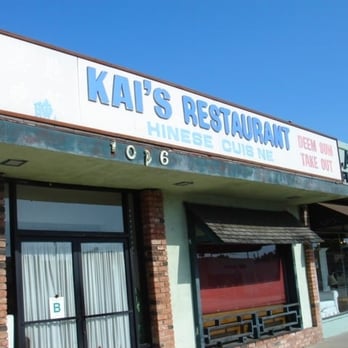
Fortunately, Kai's Restaurant was one of a kind when it came to elusiveness, and it is unlikely that any of my other misses was significant. So there’s no denying that I was able to sample just about all there was to eat in the way of Chinese food in the San Gabriel Valley throughout these 50 years.


Comments
Post a Comment